

If you’ve ever had knee pain, you know how quickly it can affect your daily routine. Walking up stairs feels like a workout, squatting is a risk, and even getting out of bed can hurt. That’s when most people start looking for help, and suddenly, you have many choices of knee supports available, such as knee wraps, knee caps, and hinged knee caps.
So what’s the difference? And most importantly, when is a hinged knee cap better than a regular knee brace?
Let’s make it simple and clear.
What is a regular knee support?
A knee support, also called a knee sleeve or knee cap, is usually made of elastic, neoprene, or compression fabric. A knee cap for pain relief provides gentle compression and support to reduce discomfort, swelling, and strain during everyday activities.
These are great for:
- A little pain in the knee
- Workouts at the gym
- Running
- Early arthritis pain
- Weakness in the knees in general
If your knee hurts, is a little strained, or feels unstable from time to time, a regular knee support usually works just fine.
What is a hinged kneecap?
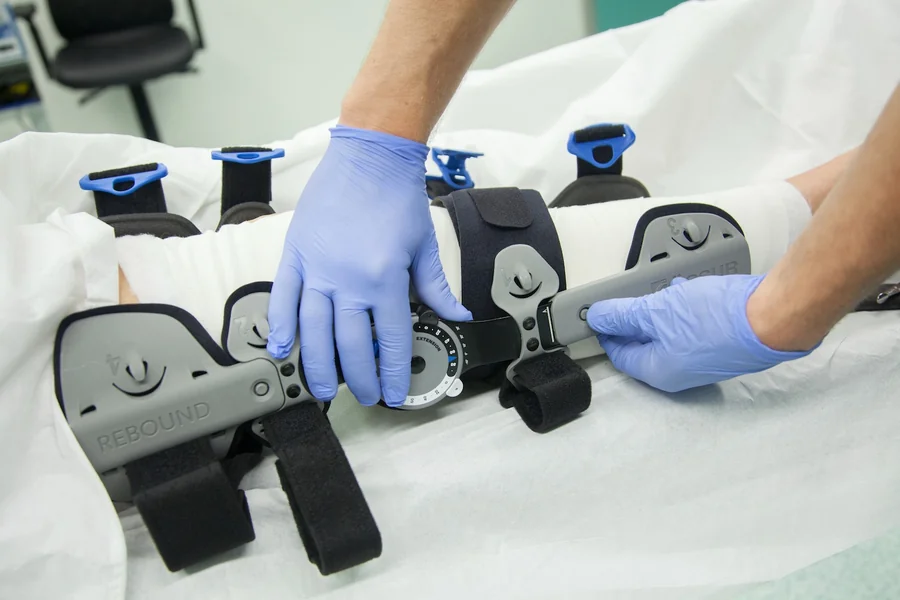
A hinged kneecap (or hinged knee brace) is even better.
Hinged braces are different from regular sleeves because they have metal or stiff supports on the sides of the knee. These hinges:
- Control movement from side to side
- Don’t twist too much
- Make the structure very stable
- Help with ligament injuries
They are designed for knee problems that are more severe than simple compression.
The main difference is between compression and stability
This is the easiest way to get it:
- Regular knee support means compression plus light support
- Hinged kneecap means stability and controlled movement
If your knee just needs to be warm and gently compressed, you can use it on a regular basis.
If your knee feels like your knee have gave up or you’ve hurt a ligament, hinged support is usually better.
When is a hinged kneecap better?
Let’s get to the real question now.
1. After an ACL, MCL, or LCL injury
Your knee becomes less stable if you hurt your ligaments, especially your ACL or MCL.
A regular kneecap won’t keep your knee from moving to the side. But a hinged knee brace keeps the knee from moving sideways, which protects the ligaments that are healing.
This is one of the most common reasons why doctors tell people to wear hinged braces.
2. After the surgery on the knee
Knees that have just had surgery need to be protected.
A brace with a hinge:
- Controls how far you can move
- Stops twisting by accident
- Gives stronger support to the structure
Many braces that you wear after surgery even let you change how much they bend.
Hinged support is usually safer if you are recovering from surgery on your meniscus or ligaments.
3. When your knee gives way
Does your knee feel unstable, as if it could collapse during a walk?
That’s a sign that the structure is unstable, and it is not just simple muscle pain.
Although it won’t stop instability, a knee sleeve can add warmth and reduce swelling. Hinged braces are built to prevent unwanted side-to-side movement.
4. Moderate to Severe Arthritis
Do you have mild arthritis? A compression sleeve could help.
But moderate to severe osteoarthritis often leads to:
- Misalignment of joints
- Unstable
- More weight on one side
Hinged braces can move pressure around and help with alignment, which can make walking less painful.
5. Going back to sports after an injury
A hinged brace can help you mentally and physically if you’re getting back into sports after a knee injury.
Athletes often wear hinged knee braces during:
- Basketball
- Soccer
- Skiing
- Training at a high level of intensity
They keep you safe while you’re cutting, turning, and moving quickly.
When is a regular knee brace enough?
To be honest, not everyone needs a big, hinged brace.
A normal kneecap works well for:
- Workouts at the gym
- Going for a run
- Slight swelling
- Tendonitis
- Arthritis in its early stages
- Knee fatigue in general
They are lighter, let air flow better, and are easier to wear under clothes.
You probably don’t need hinges if your ligaments aren’t damaged or unstable.
What do you think about knee wraps?
Knee wraps are not the same as either of these.
Most of the time, they are used for:
- Lifting heavy things
- Squats
- Temporary pressure
Hinged braces are more stable than these. They just make things tighter and more compressed while you move.
Knee wraps make sense if you’re powerlifting.
If you’re healing from an ACL injury, knee wraps are not helpful.
The trade-off between comfort and safety
This is the truth.
Knee braces with hinges:
- Bigger
- More weighty
- More obvious under clothes
- Not as breathable
Regular knee supports:
- Skinny
- Not heavy
- Good for wearing all day
- Quiet
The question then becomes: Do you need safety or comfort?
Protection should win if your knee is structurally weak.
Can you wear a hinged kneecap all day?
You can, but it depends.
Doctors may suggest wearing it all day if you have serious instability or are recovering from surgery.
But for everyday use:
- Wear while doing things
- Take off during rest
- Stay away from long-term dependence
Using strong braces too much without doing exercises to strengthen the muscles around them can weaken them over time.
Help is not a substitute for muscle strength.
How to Pick the Right One
Think about these things:
- Is my knee unstable?
- Have I hurt my ligaments or had surgery?
- Does my knee bend or move to the side?
- Is my pain bad or mild?
If most of the answers point to injury or instability, use a hinged brace.
Use regular knee support if your knees hurt, swell, or become worn out.
If you’re not sure, talk to a physiotherapist or orthopedic doctor.
A Quick Comparison Table
| Feature | Regular Knee Support | Knee Cap with Hinges |
| Compression | Yes | Yes |
| Warmth | Yes | Yes |
| Stability on the Side | Very little | Strong |
| Protecting Ligaments | No | Yes |
| Best For | Light pain and working out | Getting better after an injury, instability |
| Comfort Level | High | Moderate |
| Bulkiness | Low | Higher |
The Bottom Line
In some cases, a hinged knee cap isn’t better. It’s better when you need to stay stable, safe, and move around in a controlled way.
A regular knee support is better if you need comfort, compression, and mild relief. Picking the wrong one is neutral, it won’t hurt you, but it also won’t help you. So don’t just buy something that looks strong. Get what fits your needs.
If your knee feels weak and unstable, a hinged knee might be the best option. If your knee hurts because you worked out your legs, a regular knee wrap should be fine.
Your knees literally carry you through life. They need to be taken care of properly, whether you’re climbing stairs, going to the gym, or chasing your kids. With the right help, you can go from pushing through pain to moving with confidence again.
