

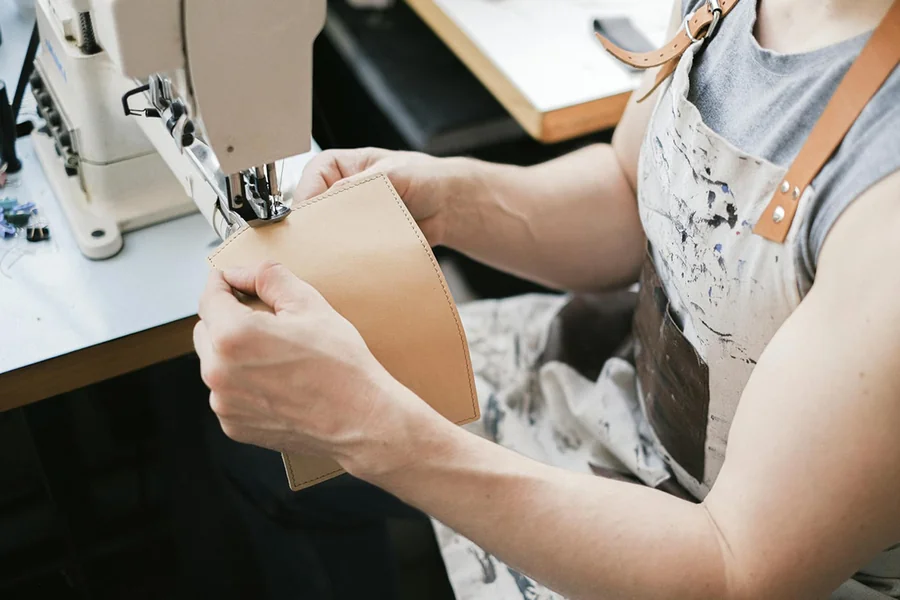
The industrial sewing machine has been one of the most influential inventions in the development of modern manufacturing. From its earliest designs in the 19th century to the highly advanced, computer-controlled machines of today, the industrial sewing machine has revolutionised the way textiles and a wide range of products are produced. Its history is closely linked to the growth of mass production, global trade, and technological innovation.
The First Sewing Machines
The concept of a mechanical sewing device emerged in the late 18th century, but the first practical machines appeared in the early 1800s. In 1790, English inventor Thomas Saint patented a design for a machine that used a hand crank to create a chain stitch. However, it was never fully developed. Later, in 1830, Barthélemy Thimonnier of France successfully built a functional machine that could produce uniforms for the French army, although his workshop was famously destroyed by tailors fearful of losing their livelihoods.
By the 1850s, inventors such as Elias Howe and Isaac Singer had refined the technology, incorporating features such as the lockstitch, the use of a needle with an eye at the point, and the addition of a foot pedal (treadle) for continuous power. These improvements paved the way for both domestic and industrial use, with factories quickly recognising the potential to produce garments and other textile goods at unprecedented speed.
Industrial Expansion and Mechanisation
The late 19th and early 20th centuries saw rapid development of industrial sewing machines. Heavy-duty machines were designed to stitch materials such as leather and canvas, making them ideal for footwear, saddlery, upholstery, and sails. The expansion of industries such as clothing, furniture, and automotive manufacturing created a huge demand for faster, stronger, and more versatile machines.
Factories soon adopted machines that could handle multiple layers of fabric, thicker threads, and tougher materials. The introduction of electrically powered machines in the early 20th century further increased speed and efficiency, setting the stage for the mass production techniques that defined the era.
The Role of Attachments and Folders
One of the most significant advances in industrial sewing technology has been the development of attachments and folders. These specialised tools, supplied by companies such as Atlantic Automation Co., allow manufacturers to achieve precision and consistency in stitching, hemming, binding, or folding fabric.
Attachments such as binding guides, hemmers, cording feet, and tape folders transformed what were once slow, manual processes into streamlined, automated operations. This not only reduced production times but also ensured higher levels of quality and uniformity across products. Today, attachments are designed for almost every conceivable application, making industrial sewing machines some of the most adaptable pieces of equipment on the factory floor.
Modern Industrial Sewing Machines
In the 21st century, industrial sewing machines are highly advanced, often featuring computerised controls, automatic thread trimming, programmable stitch patterns, and integration with robotics. Manufacturers can now customise machines to suit very specific production needs, whether that be fine garment stitching or the assembly of large, heavy-duty items.
Modern machines also benefit from improvements in ergonomics and energy efficiency, helping operators work faster and with less strain. Automation has reduced the need for repetitive manual handling, while digital interfaces allow precise programming and quick changeovers between different products.
A Wide Range of Applications
Today’s industrial sewing machines play a central role in producing a remarkably diverse range of products, including:
- Garments – from everyday clothing to technical sportswear and uniforms.
- Footwear and leather goods – shoes, bags, and belts.
- Automotive interiors – car seats, airbags, seat belts, and trim.
- Furniture and upholstery – sofas, chairs, and soft furnishings.
- Mattresses and bedding – quilted covers, mattress borders, and decorative stitching.
- Outdoor equipment – tents, awnings, sails, and backpacks.
- Medical products – hospital mattresses, surgical gowns, and protective clothing.
Each of these sectors relies on machines tailored to the materials and requirements of their products. For example, sewing an airbag demands not only extreme precision but also the strength to withstand deployment forces, while mattress production uses large-scale machines capable of handling bulky layers and complex quilting patterns.
Conclusion
From the pioneering efforts of early inventors to the sophisticated, computer-controlled systems of today, the industrial sewing machine has undergone a remarkable journey. Its evolution has enabled industries to mass-produce goods that range from fashion garments to essential safety equipment, with attachments and folders adding extraordinary versatility along the way.
As technology continues to advance, the industrial sewing machine remains at the heart of manufacturing, proving that even in a digital age, the art of stitching is still a vital thread running through modern industry.
